
After I had spent a few days seeing the most remarkable sights and curiosities of Chremnitz, I decided to travel to Newsol. My journey led me over the hills that lie on the eastern side of Chremnitz. These hills are covered with trees and forests, and they provide a great supply of wood for the service of the gold mines in the region. The miners depend heavily on this wood for building, burning, and supporting the works underground The Vitriol Mine Near the Gold Mine.
At the top of one of these hills, I noticed a very large stone or rock lying alone near the roadside. It stood apart from the other rocks and seemed placed there by nature in a strange and impressive way. The view from these hills was wide and pleasant, and it was easy to see how important this high ground was for the surrounding mining country.
The Quick-Silver Hills and the Village of Lila
As we continued our journey, we came near a small village called Lila. This place is known because quick-silver, or mercury, is found in the nearby hills. These hills, often called the quick-silver hills, are rich in mineral substances and are of great interest to those who study mines and metals.
Travelling over these hills was not easy, but it was very interesting. The ground showed many signs of mineral wealth, and the soil and stones had unusual colours in some places. After crossing this region, we came once again to the River Gran, which flows through the country and plays an important role in transport and industry Private Fun Tour Istanbul.
The River Gran and the Wooden Bridge
The town of Newsol stands upon the River Gran. There is a wooden bridge built across the river, which allows travellers, merchants, and workers to pass safely from one side to the other. This bridge is strong and useful, especially because the river can be wide and fast at certain times of the year.
One of the most ingenious works near the town is a structure made of large wooden piles placed across the river. This structure is designed to stop and collect the wood that is thrown into the river many miles upstream. The country above the town is full of forests, and the people cut large quantities of timber there. Instead of carrying the wood by land, which would require great labour and cost, they simply throw it into the river and let the current carry it down to Newsol.
By this clever method, the wood arrives without much expense or effort. It is then gathered and used in the many copper works of the town. This wood is necessary for burning, melting, casting, and hammering the copper ore, all of which require a great amount of fuel.
The Town of Newsol
Newsol is a handsome and well-built town. It has a large open square, or piazza, which gives it a noble and orderly appearance. At the upper end of this square stands a fine tower that can be seen from a distance and adds to the beauty of the town.
The buildings are strong and neat, and the town appears busy because of its connection to mining and metal works. Many workers, merchants, and travellers pass through it, making it an important place in the region.
The Castle and the Copper-Covered Church
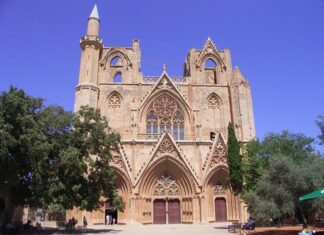
The castle of Newsol is also worth seeing. Within its grounds stands a church that is covered with copper, which is very fitting for a town connected with copper works. The shining surface of the copper roof makes the church look both rich and remarkable.
Inside the church, there are many figures carved from wood, showing great skill and careful workmanship. There are also some relics preserved within the church. However, because the church is in the possession of the Lutherans, these relics are not treated with the same religious importance as they might be elsewhere. Still, they are kept safely and carefully, more as historical curiosities than objects of worship.
Observations on Lutheran Churches
I observed something similar in several Lutheran churches in Germany, such as those in Nuremberg and Magdeburg. In these places, certain relics that remained from earlier times were not destroyed or thrown away. Instead, they were preserved and kept as rare and interesting objects. Although they are no longer used for religious devotion in the same way, they are still valued for their age, beauty, and historical significance.
Thus, my journey from Chremnitz to Newsol was not only a passage through a rich mining country but also an opportunity to see many natural features, useful inventions, and notable buildings that reflect the industry and character of the region.